Why getting on the mat might support your nervous system as much as your fitness
Martial arts, and Brazilian jiu jitsu in particular, have grown popular well beyond the fitness world — and for good reason. Beyond physical conditioning, jiu jitsu offers a distinct set of mental health benefits, especially for people managing anxiety, trauma, or a disconnection from their own bodies.
Rebuilding a Felt Sense of Safety in the Body
Trauma often leaves people feeling unsafe in their own bodies, hypervigilant, or disconnected from physical sensation altogether. Jiu jitsu requires constant, embodied awareness — of your position, your breath, your partner’s movement. This kind of structured, consensual physical contact, practiced in a controlled environment, can help rebuild a felt sense of bodily safety and agency that talk therapy alone sometimes can’t reach.
Nervous System Regulation Through Controlled Stress
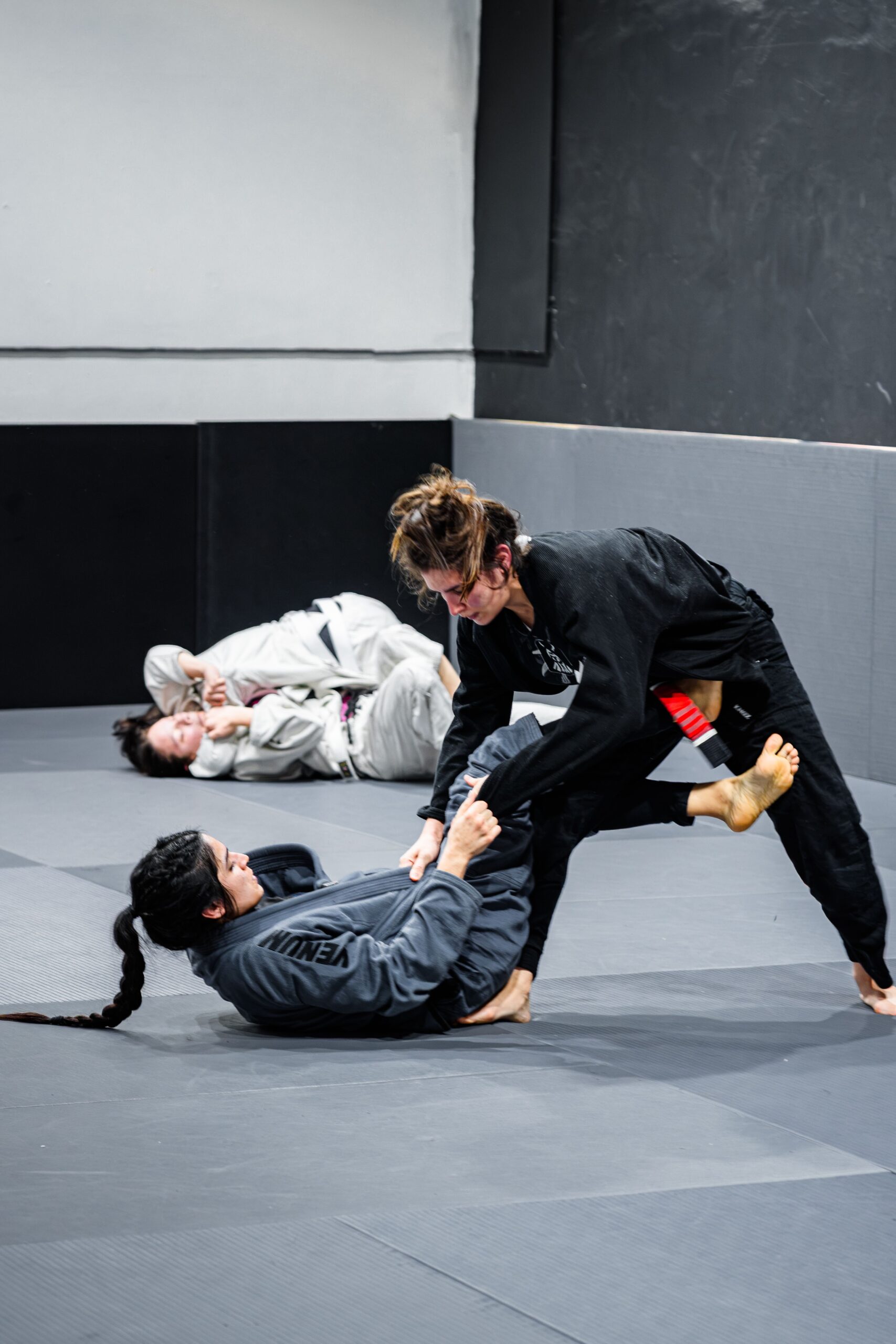
Rolling (sparring) puts the body under real physiological stress — elevated heart rate, adrenaline, the urge to fight or flee — but within a structured, rule-bound context where you can tap out at any time. This repeated practice of entering stress and returning to calm helps train the nervous system’s capacity to regulate, a skill that transfers directly to managing anxiety in daily life.
|
Reported Mental Health Benefits of Jiu Jitsu • Increased distress tolerance through repeated exposure to controlled stress • Improved body awareness and a stronger sense of physical agency • Reduced anxiety symptoms through consistent aerobic and anaerobic exercise • A structured community and sense of belonging • Practice tapping out — literally saying ‘this is too much’ and being respected |
Learning to tap out on the mat can translate into learning to say ‘no’ off of it.
A Complement to Therapy, Not a Replacement
Jiu jitsu and other martial arts aren’t a substitute for trauma treatment, but they can be a powerful complement to it. Many clients find that combining body-based practices like jiu jitsu with therapy modalities such as EMDR or heart-centered hypnotherapy accelerates their overall sense of integration and regulation.
Getting Started Safely
If you’re considering martial arts as part of your mental health toolkit, look for a gym with an emphasis on safety, consent, and beginner-friendly instruction. For trauma survivors especially, choosing an environment where you feel in control of physical contact matters as much as the technique itself.
Ready to talk?
Meaghan Coneys, LCSW offers EMDR, heart-centered hypnotherapy, and IFS-informed parts work for adults in Glen Ridge, NJ and virtually across New Jersey, New York, and Pennsylvania. Reach out to schedule a consultation.